In the salon, we are hearing more clients say the same thing: “My hair just doesn’t feel like mine anymore.”
For some, hair starts to feel drier, flatter or more fragile. For others, it is thinning around the parting, shedding more than usual, changing texture or becoming harder to style. It can feel frustrating, especially when the products and routines that used to work suddenly stop giving the same result.
Perimenopause and menopause can affect the body in many ways, and hair changes are something many people notice during this stage. Women’s Health Concern notes that, in the months or years leading up to menopause, some people notice changes in hair pattern, volume and condition, including more hair coming out when washing or brushing.
The good news is that small, well-chosen changes can make a real difference to how your hair feels day to day. It is not about panic-buying lots of new products. It is about understanding what has changed and choosing a routine that suits your hair now.
During perimenopause and menopause, hormone levels shift. This can affect the scalp, natural oils, the hair growth cycle and the way hair holds moisture. That is why some clients notice their hair feels drier, finer, flatter or more prone to frizz.
In the salon, we often see clients who have not changed anything in their routine, but their hair has changed around them. A shampoo that once worked perfectly may now feel too heavy. A conditioner that used to smooth the hair may no longer give enough moisture. Styling that once lasted all day may drop much faster.
Hair loss can also have lots of different causes. The NHS explains that hair loss may be linked to stress, illness, weight loss, iron deficiency, genetics or ageing, and recommends seeing a GP if you are worried about hair loss.
That is why we approach menopause-related hair changes carefully. Salon care and professional products can support how the hair and scalp look, feel and behave, but sudden, patchy or ongoing hair loss should always be checked properly.
One of the most common changes we hear about is dryness. Hair may feel rougher, duller or less elastic than before. It may tangle more easily, snap around the ends or lose its natural shine.
When this happens, many clients reach for the richest product they can find. Sometimes that helps, but sometimes it leaves the roots flat and the ends still dry. The better approach is to match moisture to your hair type. Fine hair may need lightweight hydration, while thicker or colour-treated hair may benefit from masks, repair treatments and more nourishing conditioners.
Some clients notice their ponytail feels smaller, their parting looks wider or their hairline feels finer. This can be especially emotional because hair is so closely tied to identity and confidence.
If you are noticing thinning, it helps to separate breakage from true hair loss. Breakage often shows as shorter, snapped pieces through the lengths. Hair loss or shedding usually appears as more hair coming from the root. A hairdresser can help you look at the condition of the hair, but a GP or dermatologist is best placed to assess the cause if thinning is significant or persistent.
Hair can also start to feel different in texture. Some people notice it becomes coarser, fluffier or harder to smooth. Others find it feels finer and softer, but with less body.
This does not always mean the hair is “bad” or damaged. It may simply need a different routine. A smoothing cream, heat protector, lightweight oil, leave-in conditioner or bond-building treatment may help, depending on the hair type and finish you want.
A healthy scalp is the foundation for healthy-looking hair. During perimenopause and menopause, some clients notice their scalp feels tighter, drier, itchier or more sensitive than before.
This is where scalp care can make a real difference. Gentle cleansing, careful rinsing, scalp serums and professional scalp treatments may help keep the scalp feeling clean, balanced and more comfortable. Stonehills Hair also offers advice around professional products and consultations for clients who are unsure what will work best for their hair type.
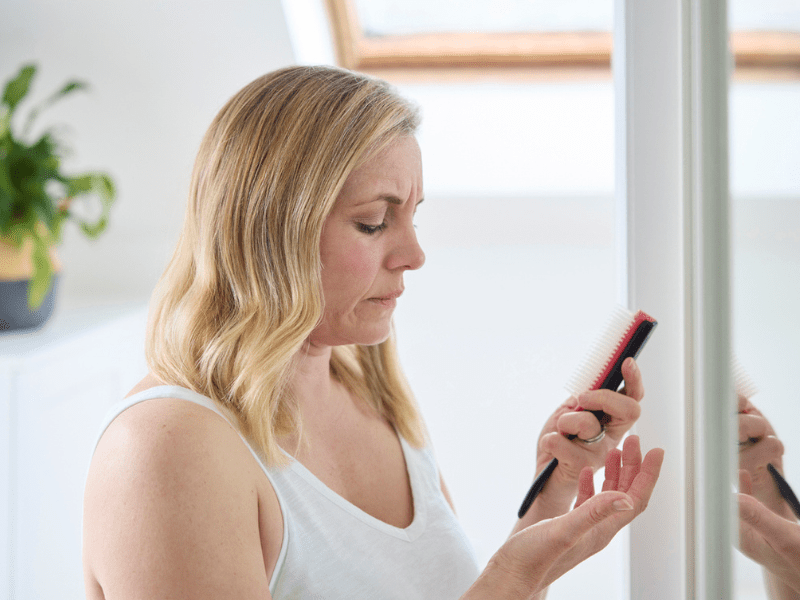
If your scalp feels uncomfortable, oily, flaky or tight, start there. Healthy-looking hair grows from the scalp, so it makes sense to support the roots as well as the lengths.
A good scalp routine may include a suitable shampoo, occasional exfoliating scalp care, a lightweight scalp serum or an in-salon hair and scalp treatment. Try not to scrub aggressively, especially if the scalp is sensitive. Use your fingertips, rinse thoroughly and avoid leaving conditioner or heavy styling products around the roots unless they are designed for scalp use.
One of the biggest mistakes is trying to force an old routine to work on hair that has changed. If your hair is now finer, drier, more fragile or more sensitive, your products may need adjusting.
For thinning or fine hair, avoid anything that weighs the roots down. Look for lightweight volume, strengthening support and gentle scalp care. For dry or brittle hair, consider moisturising shampoo, nourishing conditioner, masks and heat protection. For fragile or colour-treated hair, repair-focused treatments may help improve the way the hair feels and behaves.
Hair that is already dry or fragile can struggle with repeated heat styling. That does not mean you have to stop styling your hair completely, but it does mean the routine may need softening.
Use heat protection, lower the temperature where possible and avoid going over the same section again and again. Gentle brushing matters too. If the hair is shedding or fragile, pulling through knots can create more breakage and make the hair feel thinner through the ends.
In the salon, we often see clients arrive with several products they bought out of worry. A growth serum, a heavy oil, a thick mask, a scalp scrub and a volumising spray all at once can be too much, especially for fine or thinning hair.
A simpler routine is usually better. Start with the main issue. Is the scalp uncomfortable? Is the hair dry? Is it breaking? Is it shedding? Once you know what you are trying to improve, it becomes much easier to choose the right product.
Some hair changes are gradual and manageable with the right care. Others need medical advice.
Speak to a GP, dermatologist or qualified healthcare professional if you notice sudden hair loss, bald patches, scalp pain, redness, heavy scaling, rapid shedding or hair loss that is affecting your wellbeing. The NHS also recommends seeing a GP if you are worried about hair loss and advises getting an idea of the cause before considering commercial hair loss clinics.
At Stonehills Hair, we can support the cosmetic and practical side: how your hair feels, how it behaves, what products suit it, how to style it more gently and how to care for your scalp. We do not diagnose medical hair loss, but we can help you understand what your hair may need day to day.
If your hair has changed during perimenopause or menopause, you do not have to work it out alone. Our team can help you look at your hair type, scalp comfort, styling routine and the changes you have noticed, then guide you towards products and treatments that suit you now.
Sometimes that may mean a scalp care routine. Sometimes it may be a strengthening treatment, a lighter conditioner, a volumising product, a hair loss support product or a professional consultation in the salon.
We believe product advice should be personal. Your hair, scalp, lifestyle and confidence all matter. The aim is not to overwhelm you with a long routine, but to help your hair feel healthier, more manageable and more like yours again.
If your hair feels drier, thinner or different during perimenopause or menopause, speak to the Stonehills Hair team for friendly, salon-led guidance. We can help you choose the right next step for your hair and scalp.
Get in touch today for more expert advice from our salon professionals, and book a hair and scalp consultation.