In the salon, we often hear clients say, “I condition my hair every time I wash it, so why does it still feel dry?”
It is a really common frustration, and it does not always mean you are doing something wrong. Often, it means your hair needs something slightly different from the routine you are currently using. The issue might be the conditioner itself, how it is being applied, product build-up, colour damage, heat styling or the difference between dryness and damage.
A good product is not always the right product for your hair. If your hair still feels rough, frizzy, dull or brittle after conditioning, it may be time to look a little closer at what your hair is actually asking for.
Conditioner is not one-size-fits-all. What works beautifully for thick, coarse or curly hair may feel far too heavy on finer hair. Equally, a lightweight conditioner that suits fine hair may not give enough support to hair that is dry, coloured or damaged.
We usually recommend lightweight conditioners applied mainly through the mid-lengths and ends for finer hair. For thicker, curly or more textured hair, a richer conditioner or mask may be better. If your hair is colour-treated or bleached, it may need repair and strength as well as softness.
Placement matters too. If your roots get oily quickly but your ends feel dry, applying conditioner all over can make the scalp feel greasy while the ends still feel undernourished. In that case, it is usually better to focus conditioner where the hair needs it most.
Sometimes hair feels dry because it is coated, not because it needs more moisture. This is something we see a lot in salon.
Dry shampoo, oils, masks, styling creams, hairspray and even conditioner can build up over time. When that happens, the hair may feel dull, heavy, rough or like it never gets properly clean. Adding more conditioner on top can make the problem worse rather than better.
If your hair feels dry but also heavy or coated, you may need a proper cleanse before adding more moisture. A suitable shampoo, occasional clarifying shampoo or hair scrub can help lift product build-up and give your conditioner a better chance to work.
The key is balance. You do not want to strip the hair, especially if it is already fragile, but you also do not want to keep layering products onto hair that needs refreshing.
This is where a lot of people get stuck. Dry hair usually needs moisture. Damaged hair often needs strengthening, repair and gentler styling habits.
Hair can become damaged through colouring, bleaching, heat styling, brushing too harshly or using the wrong tools. Damaged hair can feel dry even after conditioning because the surface of the hair is no longer holding moisture in the same way.
A richer conditioner may make it feel softer for a short time, but it may not be enough on its own. You may need a hair mask, bond-building treatment, leave-in product or a more protective styling routine.
If your hair snaps easily, tangles more than usual, feels stretchy when wet or looks frizzy even after smoothing products, it may need repair support as well as moisture.
A small change in how you use conditioner can make a noticeable difference.
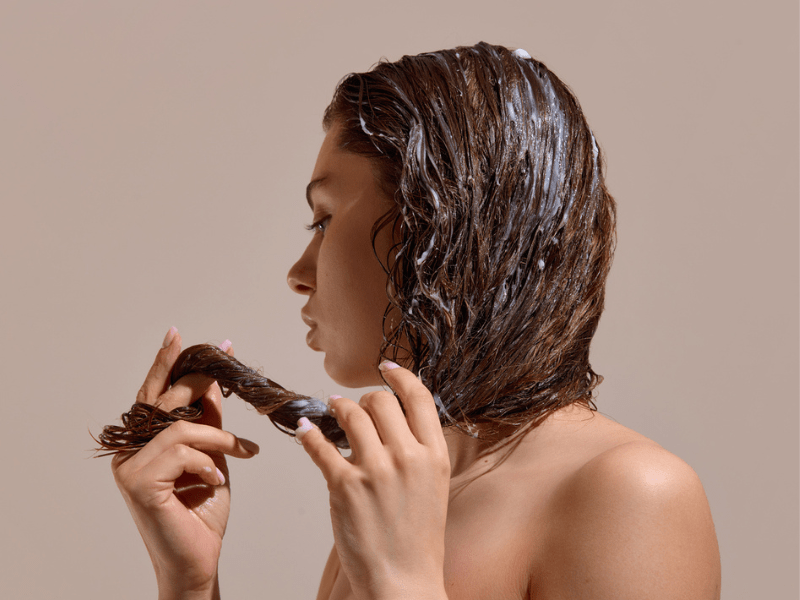
For most hair types, conditioner should be applied through the mid-lengths and ends rather than directly onto the roots. Fine hair usually needs less product, while thicker or curly hair may need more careful distribution so the product reaches all areas evenly.
Rinsing is also important. If conditioner is not rinsed properly, the hair can feel flat, coated or dull. On the other hand, rinsing too aggressively or using very hot water can leave the hair feeling less soft.
If you are using a mask or treatment, check the instructions. Some work best on towel-dried hair, while others are designed for quick use in the shower. Leaving a product on longer does not always mean better results.
If you regularly use straighteners, curling wands, hair dryers or hot brushes, your hair may need more support than conditioner alone can give.
Heat styling can make hair feel dry or rough, especially if you are not using heat protection. Colour-treated and bleached hair can also need extra care because it is often more fragile and more prone to dryness through the lengths and ends.
Everyday habits make a difference too. Tying hair up tightly, brushing through knots roughly, going over the same section with heat several times or skipping protection products can all leave the hair feeling harder to manage.
That does not mean you need to stop styling your hair. It simply means your routine should support the way you actually wear it.
Most people do not need a huge routine. They need the right few products, used in the right way.
Start with your shampoo. If it is too harsh, your hair may feel stripped. If it is too rich, it may leave build-up. Then look at your conditioner and whether it suits your hair now, not what your hair used to need.
If conditioner is not enough, add a hair mask or treatment once a week or as needed. If your ends feel rough or frizzy, a small amount of hair oil or serum can help smooth and add shine. If you heat style regularly, heat protection should be part of your routine.
If your hair feels coated, consider whether you need a clarifying wash or scrub before adding more conditioning products.
If your hair still feels dry even when you condition it, you do not need to keep guessing. The answer might be moisture, repair, a lighter conditioner, a deeper cleanse or a better styling routine.
At Stonehills Hair, we can help you choose products based on your hair type, scalp, colour history and how you style your hair day to day. Sometimes one small change makes all the difference.
Explore our shampoo, conditioner, hair mask, hair oil, scrub and heat protection ranges, or speak to our product experts for friendly product advice.

Get in touch with our expert team in Welwyn Garden City for luxury, in-salon hair services.